
How to freeze food and prevent freezer burn
Freezer burn starts where air reaches frozen food. Here is how to wrap food against it, what freezes well, how long food keeps at 0 °F (−18 °C), and how to thaw and refreeze, with the official source for each step.

Short answer: To prevent freezer burn, keep air away from the food. The UK Food Standards Agency says to put food in an airtight container or wrap it well in freezer bags or freezer wrap. The USDA says to overwrap store packaging of meat and poultry for longer storage, and to freeze food fast, spread out in one layer, in a freezer at 0 °F (−18 °C) or below. Freezer burn is a matter of quality: cut the dry, grayish-brown spots away before or after cooking.
How PantryWeave helps with the freezer
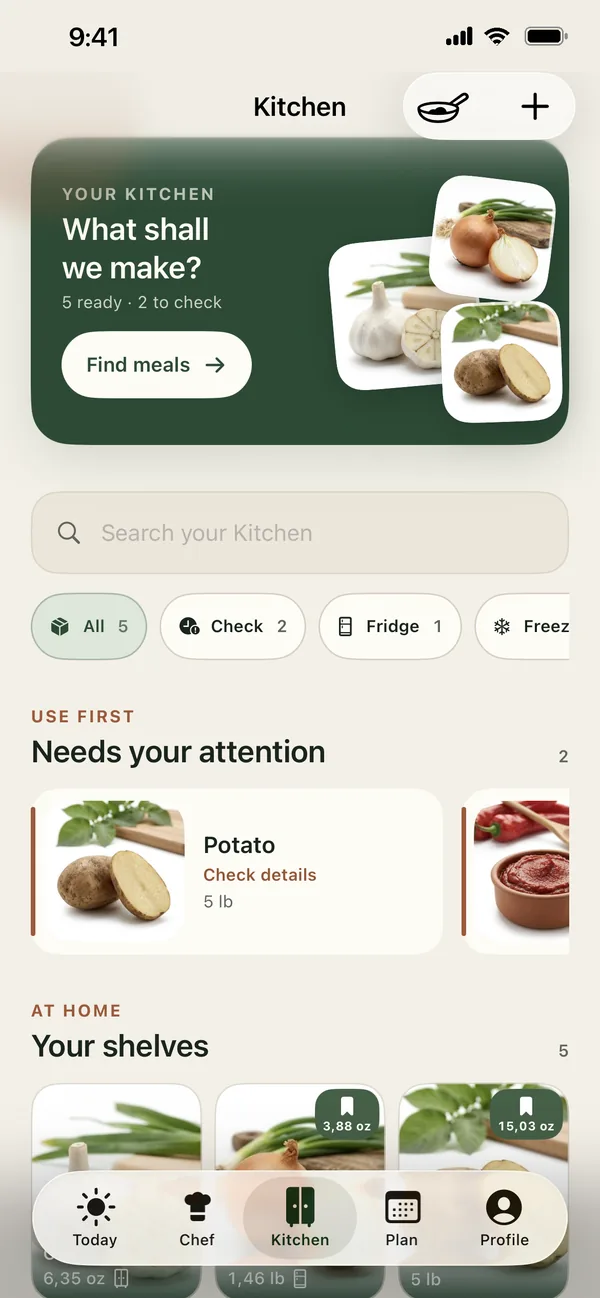
Kitchen in PantryWeave keeps the fridge, the freezer and the pantry apart, and it stays current by itself: mark a meal as cooked and the app asks, then updates your stock.
Moved to the freezer, counted as frozen
Decide to freeze the chicken you will not cook this week, move it from the fridge to the freezer in Kitchen, and the app counts it as frozen.
The right place for every item
Kitchen shows where each item should be stored. Shopping you move into Kitchen goes to the fridge, freezer or pantry it belongs in, once you have corrected the amounts you bought.
See what needs using soon
Freshness, or a suggested day to use an item by, is tracked by where it is stored, and the Use first shelf shows which items need eating soon.
An estimate, not an official time
The app’s freshness tracking is a reminder based on estimates. The freezer times and thawing steps on this page come from the USDA and the UK Food Standards Agency.
What is freezer burn?
Freezer burn shows up as grayish-brown, leathery spots. The USDA says it is caused by air coming into contact with the surface of the food; the UK Food Standards Agency describes food exposed to cold, dry air that dehydrates and forms ice crystals over time. Both describe it as a matter of quality: the USDA says it leaves food dry in spots.
Cut freezer-burned parts away before or after cooking. Heavily freezer-burned food may have to be thrown out for quality reasons, the USDA adds.
How to prevent freezer burn
- Shut out the air. Put food in an airtight container, or wrap it well in freezer bags or freezer wrap, as the Food Standards Agency advises.
- Overwrap store packs. Meat and poultry can go into the freezer in their original packaging, but that wrap lets air through and quality may drop over time, so for longer storage the USDA says to overwrap it.
- Freeze it fast. Slow freezing forms large ice crystals that damage the food, which is why thawed meat can drip and lose juiciness. The USDA says food 2 inches thick should freeze completely in about 2 hours: use a quick-freeze shelf if your freezer has one, and spread new packages out in one layer, stacking them only once they are frozen solid.
- Cool and portion first. Let warm dishes cool before they go in, and divide food into smaller portions in containers or freezer bags, so it cools quickly and you can defrost only what you need, as the Food Standards Agency suggests.
- Keep it at 0 °F (−18 °C). Check with an appliance thermometer. A fridge’s freezer compartment that cannot hold that temperature, or is opened often, is for short-term storage only, the USDA says.
- Label and date it. The Food Standards Agency suggests labelling what you freeze and checking that food is not kept too long, so nothing becomes an unidentified frozen object.
What freezes well, and what doesn’t
The USDA says you can freeze almost any food. Among the exceptions are canned food and eggs in their shells, although food taken out of the can may be frozen; for eggs, see how long eggs last and how to store them. Some foods simply don’t freeze well, and the USDA names mayonnaise, cream sauce and lettuce. Raw meat and poultry keep their quality longer in the freezer than cooked meat, because cooking removes moisture.
FoodKeeper, the USDA’s storage app, does not recommend freezing cream cheese, cottage cheese, sour cream, potato salad, cucumbers or lettuce. Most vegetables need blanching first: cook them briefly in boiling water or in a microwave, then chill them quickly before freezing, as the USDA describes.
How long food keeps in the freezer
The USDA says freezer times are for quality only: food stored constantly at 0 °F keeps indefinitely, and only its quality suffers with long storage. If something is not on the chart, it suggests judging its quality after thawing, starting with the smell. FoodKeeper counts some of these times from the date of purchase.
| Food | Freezer at 0 °F (−18 °C) | Source |
|---|---|---|
| Soups and stews | 2 to 3 months | USDA freezer chart |
| Casseroles | 2 to 3 months | USDA freezer chart |
| Frozen dinners and entrees | 3 to 4 months | USDA freezer chart |
| Gravy, meat or poultry | 2 to 3 months | USDA freezer chart |
| Uncooked roasts, steaks or chops | 4 to 12 months | USDA freezer chart |
| Uncooked ground meat | 3 to 4 months | USDA freezer chart |
| Cooked meat | 2 to 3 months | USDA freezer chart |
| Cooked fish | 1 to 2 months | FoodKeeper |
| Cooked and mashed potatoes | 10 to 12 months | FoodKeeper |
| Bananas | 2 to 3 months | FoodKeeper |
| Strawberries, raspberries, cherries or blueberries | 8 to 12 months | FoodKeeper |
| Fresh herbs | 1 to 2 months | FoodKeeper |
| Mushrooms | 10 to 12 months | FoodKeeper |
| Hard cheese, such as cheddar, swiss or block parmesan | 6 months | FoodKeeper |
| Shredded cheese | 3 to 4 months | FoodKeeper |
| Milk, plain or flavored | 3 months | FoodKeeper |
| Store-bought bread, rolls and buns | 3 to 5 months | FoodKeeper |
Raw and cooked chicken have their own guide: how long chicken lasts in the fridge and freezer.
Freezing bananas, berries and fresh herbs
FoodKeeper gives frozen bananas 2 to 3 months, strawberries, raspberries, cherries and blueberries 8 to 12 months, and fresh herbs 1 to 2 months. Before freezing, the same foods keep only a short while in the fridge: fresh herbs 7 to 10 days, and ripe bananas 3 days, with the skin turning black.
The USDA’s advice for any food applies here too: freeze what you will not use quickly sooner rather than later, because food frozen at peak quality tastes better after thawing than food frozen near the end of its useful life. Pack fruit and herbs airtight, as above, and label them.
How to thaw frozen food
The USDA gives three ways: in the refrigerator, in cold water, or in the microwave. The fridge is the slowest. Small items may thaw overnight, most foods take a day or two, and large items take longer. For cold water, seal the food in a leak-proof plastic bag, keep the water cold by changing it every 30 minutes, and cook the food right after. Food thawed in the microwave should also be cooked straight away, because parts of it may warm up and start to cook.
The USDA warns against thawing food on the kitchen counter, outdoors, in a garage, basement or car, in the dishwasher or in a plastic garbage bag. The Food Standards Agency also prefers the fridge, in a container big enough to catch drips, or the microwave’s defrost setting directly before cooking. Once food has fully defrosted, it says to use it within 24 hours.
You can also cook raw or cooked meat, poultry or casseroles straight from frozen. The USDA says it takes about one and a half times as long.
Can you refreeze food after thawing?
US guidance allows it in several cases. Food thawed in the refrigerator can be refrozen without cooking, though it may lose some quality from the moisture lost in thawing. Raw food that was frozen can be frozen again once it is cooked, and the unused part of cooked food thawed in the fridge can go back in the freezer. Do not refreeze anything left out of the fridge for more than 2 hours, or 1 hour above 90 °F (32 °C).
In the UK, the Food Standards Agency says you can freeze food again once it has been cooked, but you can then reheat it only once.
Where the numbers come from
Read on October 30, 2026.
- USDA FSIS: freezing and the freezer storage chart (freezer burn, packaging, freezing speed, what freezes well, thawing, refreezing, cooking from frozen)
- USDA FoodKeeper app (fish, potatoes, fruit, herbs, mushrooms, cheese, milk and bread, and the foods it does not recommend freezing)
- Food Standards Agency: how to chill, freeze and defrost food (wrapping, labelling, freezer burn, defrosting, refreezing cooked food)
Frequently asked questions
How do you prevent freezer burn?
Keep air away from the food. Use an airtight container or wrap food well in freezer bags or freezer wrap, overwrap store packaging for long storage, freeze food quickly in a single layer and keep the freezer at 0 °F (−18 °C).
What is freezer burn?
Dry, grayish-brown, leathery spots where air has reached the surface of frozen food. The USDA and the UK Food Standards Agency both describe it as affecting quality.
Is freezer-burned meat OK to eat?
Yes, according to the USDA: freezer burn makes food dry in spots, which is a matter of quality. Cut the freezer-burned parts away before or after cooking; heavily freezer-burned food may have to be thrown out for quality reasons.
Can you freeze cheese?
Most kinds, yes. FoodKeeper gives hard cheese such as cheddar, swiss or block parmesan 6 months in the freezer, shredded cheese 3 to 4 months and soft cheese such as brie or goat cheese 6 months. It does not recommend freezing grated parmesan, processed slices, cream cheese or cottage cheese.
Can you freeze milk?
Yes. FoodKeeper gives plain or flavored milk 3 months in the freezer, counted from the date of purchase. It does not recommend freezing lactose-free milk.
Can you refreeze meat after thawing?
Yes, if it thawed in the refrigerator, according to the USDA, though it may lose some quality. Do not refreeze meat left out of the fridge longer than 2 hours, or 1 hour above 90 °F. In the UK, the Food Standards Agency says you can freeze food again once it is cooked, and then reheat it only once.
Related guides

See what is in your freezer
Download PantryWeave and keep the fridge, freezer and pantry in one Kitchen, with a Use first shelf for what needs eating soon.

Free to start · iPhone