

Fridge or pantry? Does butter need to be refrigerated?
Butter can stay on the counter for a day or two, but the fridge keeps it far longer. Below is a fridge-or-pantry chart for butter, sauces, pies, fruit and vegetables, with the official US and UK guidance.

Short answer: Only if you are keeping it longer than a day or two. The USDA’s FoodKeeper says butter may be left at room temperature for 1 to 2 days; in the fridge it keeps 1 to 2 months and in the freezer 6 to 9 months. For everything else, the UK’s Food Standards Agency gives a simple rule: food with a use-by date, cooked dishes, salads and dairy products go in the fridge.
Fridge or pantry: where common foods keep best
Times from the USDA’s FoodKeeper. “After opening” times are for the fridge.
| Food | Where to keep it | How long |
|---|---|---|
| Butter | Fridge; 1 to 2 days at room temperature | 1 to 2 months in the fridge, 6 to 9 months frozen |
| Hard cheese, such as cheddar or block parmesan | Fridge | 6 months unopened, 3 to 4 weeks after opening |
| Cream cheese | Fridge | 2 weeks |
| Eggs | Fridge | 3 to 5 weeks; see how long eggs last |
| Ketchup | Pantry; the fridge keeps it best once opened | 1 year unopened, 6 months after opening |
| Soy sauce | Pantry; the fridge keeps it best once opened | 3 years unopened, 1 month after opening |
| Mayonnaise, store-bought | Pantry; the fridge keeps it best once opened | 3 to 6 months unopened, 2 months after opening |
| Jam | Pantry, then the fridge once opened | 6 to 18 months unopened, 6 to 12 months after opening |
| Pumpkin or pecan pie | Fridge; 2 hours at room temperature | 3 to 4 days, 1 to 2 months frozen |
| Fruit pies, such as apple | Counter for 1 to 2 days, then the fridge | 1 week in the fridge, 8 months frozen |
| Potatoes | Pantry | 1 to 2 months, or 1 to 2 weeks in the fridge |
| Onions | Pantry or fridge | 1 month in the pantry, 2 months in the fridge |
| Tomatoes | Pantry until ripe | Then 7 days |
| Bananas and avocados | Counter until ripe, then the fridge | 3 days for ripe bananas, 3 to 4 days for ripe avocados |
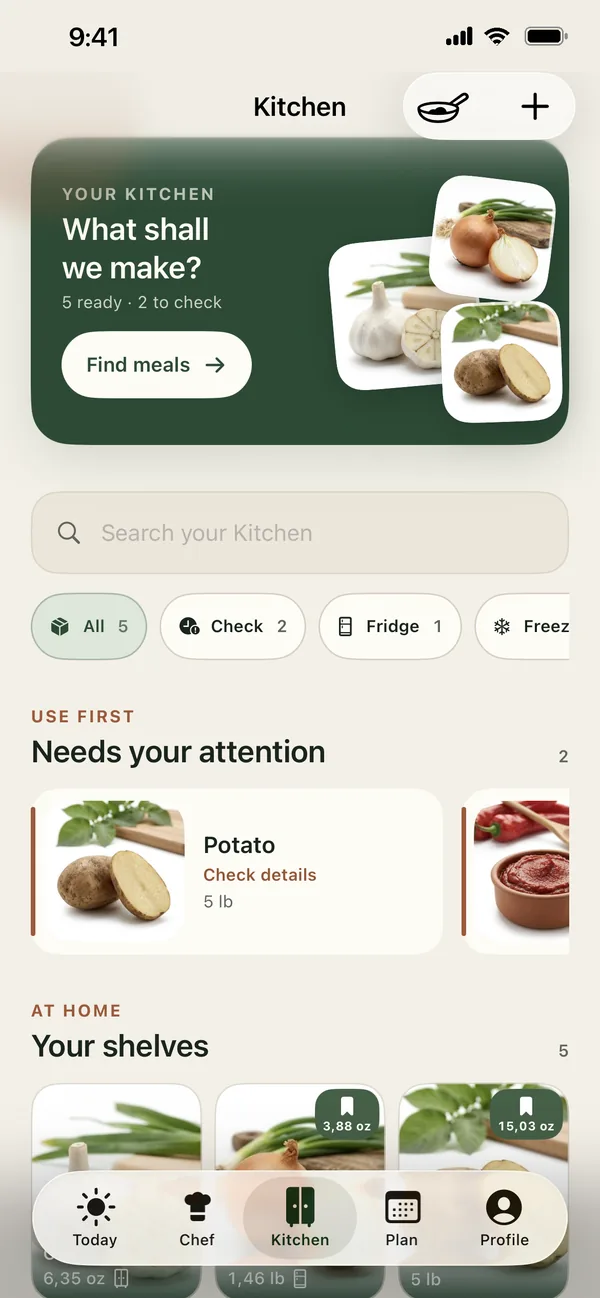
PantryWeave shows where everything goes
Kitchen sorts what you buy into fridge, freezer and pantry, and shows where each item belongs.
Where each item should be stored
Open Kitchen and it shows where each item should be stored: fridge, freezer or pantry.
Put away as you unpack
After shopping you only adjust the amounts you actually bought and move them straight into Kitchen. Each item goes to the right place, whether that is the fridge, the freezer or the pantry.
Freshness that follows the shelf
The suggested day to use an item by depends on where it is stored. Move something from the fridge to the freezer and Kitchen counts it as frozen. A Use first shelf, with badges like “Use in 2d”, shows what to use next.
An estimate, not an official date
Freshness checks are estimates and reminders. The official times are in the chart above, and the storage instructions on the pack come first.
How long can butter sit out?
FoodKeeper’s answer is 1 to 2 days at room temperature. Past that, the fridge is the place: butter keeps 1 to 2 months there, counted from the day you buy it, and 6 to 9 months in the freezer. Margarine is a fridge food too, with 6 months in the fridge and 12 months frozen.
Does ketchup need to be refrigerated?
No, but it keeps better there. FoodKeeper says shelf-stable ketchup, cocktail sauce and chili sauce can be stored at room temperature after opening, and that the “refrigerate after opening” line on their labels is about quality. Opened ketchup keeps 6 months in the fridge; an unopened bottle keeps 1 year in the pantry.
Does soy sauce need to be refrigerated?
Soy sauce and teriyaki sauce work the same way: FoodKeeper lists them as fine at room temperature after opening, with the fridge keeping them fresh for longer. Unopened, soy sauce keeps 3 years in the pantry; opened, FoodKeeper gives it 1 month in the fridge. Mustard (1 year in the fridge after opening), barbecue sauce (4 months) and bottled salad dressings (1 to 3 months) are on the same list.
Does pumpkin pie need to be refrigerated?
Yes. FoodKeeper gives pumpkin and pecan pie only 2 hours at room temperature; after that they go in the fridge, where they keep 3 to 4 days, or in the freezer, for 1 to 2 months. Fruit pies such as apple are more forgiving: 1 to 2 days on the counter, 1 week in the fridge and 8 months in the freezer. Cream pies keep 3 to 4 days in the fridge, and FoodKeeper does not recommend freezing them. Planning the holiday? See the Thanksgiving leftovers plan.
Fruit and vegetables: counter, pantry or fridge?
- Potatoes: FoodKeeper recommends the pantry for whole potatoes, where they keep 1 to 2 months. In the fridge they keep 1 to 2 weeks and, FoodKeeper notes, can darken during cooking and taste unpleasantly sweet. In the UK, the Food Standards Agency says you can store potatoes either in the fridge or in a cool, dark, dry place.
- Onions: 1 month in the pantry or 2 months in the fridge.
- Tomatoes: on the counter until ripe, then 7 days. FoodKeeper says the fridge may affect their flavor, and the USDA recommends pantry storage.
- Bananas and avocados: ripen them at room temperature, then move them to the fridge. Ripe bananas keep 3 days there, and their skin will blacken; ripe avocados keep 3 to 4 days.
- Garlic: whole bulbs in the pantry for 1 month, single cloves in the fridge for 3 to 14 days.
- Apples and citrus: both last longer cold. Apples keep 3 weeks in the pantry and 4 to 6 weeks in the fridge; lemons, limes and oranges 10 days and 10 to 21 days.
What always goes in the fridge
The Food Standards Agency’s rule: keep food with a use-by date, cooked dishes, salads and dairy products in the fridge, set between 0 and 5 °C, and follow the storage instructions on the packaging, including the best before and use-by dates. Some foods only need the fridge once they are opened, so check the label.
Opened cans need one extra step. The FSA says not to store food in an opened tin can: if you won’t use it all at once, empty the rest into a container, cover it and put it in the fridge. Cans with resealable lids, such as cocoa and golden syrup, are the exception. FoodKeeper gives opened low-acid canned food, such as beans, soup or vegetables, 3 to 4 days in the fridge.
Wondering about peanut butter, honey, vinegar or sugar? They have their own guide: does it go bad?
Where the numbers come from
Read on October 30, 2026.
- USDA FoodKeeper (all times on this page)
- Food Standards Agency: chilling, freezing and defrosting (what goes in the fridge, fridge temperature, opened cans)
- Food Standards Agency: home food fact checker (potatoes in the fridge, cans with resealable lids)
Frequently asked questions
Does butter need to be refrigerated?
Only if you are keeping it longer than a day or two. The USDA’s FoodKeeper says butter may be left at room temperature for 1 to 2 days; in the fridge it keeps 1 to 2 months, and in the freezer 6 to 9 months.
Does ketchup need to be refrigerated?
No. FoodKeeper says shelf-stable ketchup can be stored at room temperature after opening; the fridge keeps it at its best for longer, 6 months once opened.
Does soy sauce need to be refrigerated?
No. Shelf-stable soy sauce can stay at room temperature after opening, according to FoodKeeper. Unopened it keeps 3 years in the pantry; once opened, FoodKeeper gives it 1 month in the fridge.
Does pumpkin pie need to be refrigerated?
Yes, after 2 hours at room temperature, according to FoodKeeper. It keeps 3 to 4 days in the fridge and 1 to 2 months in the freezer, and pecan pie follows the same times.
Does apple pie need to be refrigerated?
Not straight away. FoodKeeper gives fruit pies such as apple 1 to 2 days at room temperature, then 1 week in the fridge or 8 months in the freezer.
How long do potatoes last?
1 to 2 months in the pantry, which FoodKeeper recommends for whole potatoes, or 1 to 2 weeks in the fridge. The UK’s Food Standards Agency says either the fridge or a cool, dark, dry place works.
Related guides

Let Kitchen show where it goes
Download PantryWeave and see where each item in your kitchen should be stored.

Free to start · iPhone