


Meal planning when different people have different allergies
A nut allergy for one child, a milk allergy for another, and a parent who simply hates fish. Here is a calm, repeatable way to plan a week around all of it.

Short answer: List every person's allergens, choose meals whose ingredients avoid all of them at once, and check the label of every product you buy. PantryWeave lets you declare allergens per person and excludes recipes that conflict with any saved profile, based on each recipe's known ingredients. It does not assess cross-contact, so labels and preparation still need checking.
Start with an allergy map
When allergies differ from person to person, the risk is mixing them up during a busy week. Write every person and their declared allergens in one place before you think about recipes. Add dislikes on a separate line so they never get confused with allergies.
The map turns a vague worry into a short, clear list of ingredients the whole table must avoid when you eat together — and a few that only matter on nights when a particular person is eating.
| Person | Allergens | Dislikes |
|---|---|---|
| Leo (9) | Peanuts | — |
| Ana (6) | Milk | Spicy food |
| Sam (adult) | None declared | Fish, mushrooms |
Five habits that make the week manageable
- Plan for the strictest combination. On nights when everyone eats together, choose dishes that avoid every declared allergen at the table.
- Build a list of trusted staples. Keep a short list of products you have checked: the pasta, the stock, the bread. Re-check labels when a brand changes its recipe or packaging.
- Know the usual hiding places. Peanuts and other nuts turn up in sauces, pesto and baked goods; milk in bread and ready meals; egg in fresh pasta and mayonnaise; soy and wheat in soy sauce; sesame in tahini and hummus.
- Cook simple, ingredient-led dishes. The fewer processed components a recipe has, the fewer labels you need to read.
- Plan leftovers on purpose. A dish you know is fine for everyone is worth cooking twice.
About allergies. PantryWeave matches recipes against the known ingredients of each recipe and the allergens you declare. It does not assess cross-contact or “may contain” statements and is not medical advice. Always read package labels and check how food is prepared.
Common planning mistakes
- Cooking a separate “allergy meal” every night. It doubles the work and makes the child with the allergy feel singled out. Shared dishes that avoid every declared allergen are easier for everyone.
- Trusting yesterday’s label. Manufacturers change recipes. Re-read labels on familiar products every so often, especially after packaging changes.
- Forgetting guests and grandparents. When someone else cooks, share the allergy map with them, not just a verbal reminder.
- Mixing up allergies and dislikes. Keep them on separate lines so a dislike never gets the same weight as an allergy — and an allergy is never treated as a preference.
How PantryWeave helps
PantryWeave keeps the allergy map for you and checks each suggestion against it.
Allergens per person
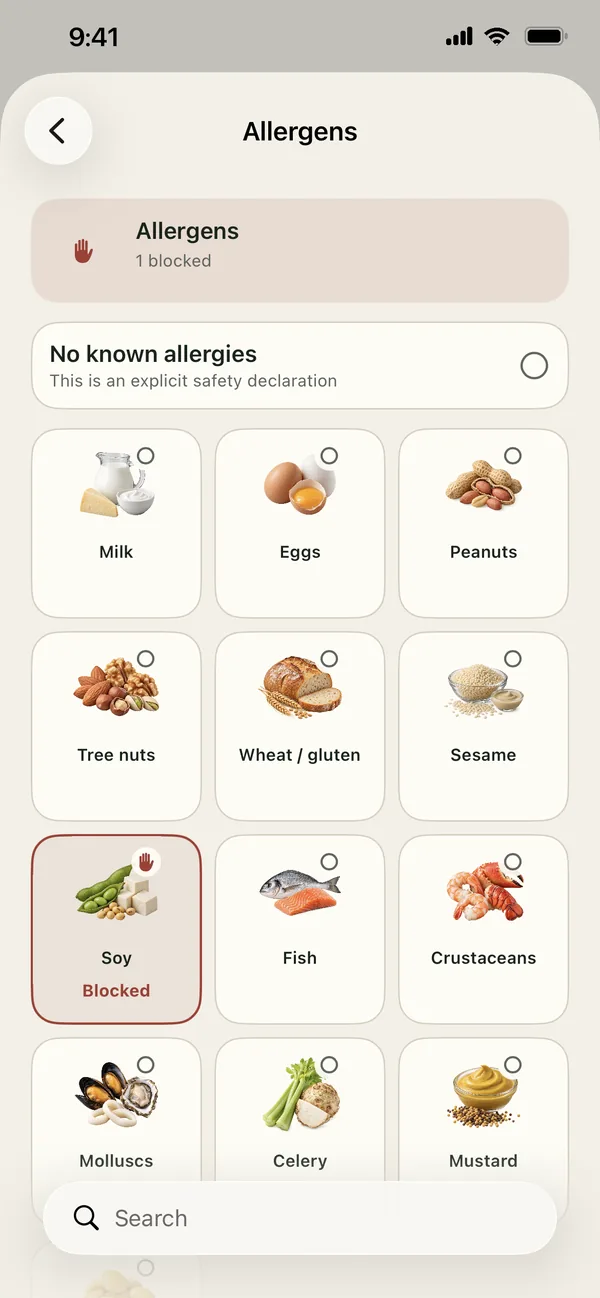
Each person declares their allergens, or chooses I have no allergies to declare. Dislikes go into ingredient rules, separate from allergies.
Conflicts are left out
Recipes that conflict with a selected profile’s declared allergens are excluded from suggestions.
Suitable for everyone
A recipe that passes every saved profile is marked Suitable for everyone, so you can see the overlap at a glance.
A list for the gap only
Recipe amounts are combined and what is already in Kitchen is subtracted, so the list only holds what is missing.
Frequently asked questions
Does PantryWeave guarantee a recipe is allergen-free?
No. PantryWeave matches recipes against their known ingredients and the allergens you declare. Always read package labels and check how food is prepared.
Does PantryWeave check may contain warnings or cross-contact?
No. It does not assess cross-contact or may contain statements. Check those on the packaging and follow your allergist’s advice.
Can I plan for several people with different allergies at once?
Yes. Each person has their own profile with declared allergens, and suggestions are checked against every saved profile.
Is PantryWeave medical advice?
No. It is a meal-planning tool. Talk to your doctor or allergist about managing food allergies.
Related guides

Keep everyone’s allergies in one plan
Download PantryWeave on the App Store and plan your first week from what you already have.

Free to start · iPhone