

How to freeze berries
The National Center for Home Food Preservation describes four packs for whole berries, a tray pack, a dry pack, a sugar pack and a syrup pack, and crushed or puréed berries as a fifth option. Below: each pack, preparing and washing the berries, headspace and freezer times, from the National Center and four state extension services, some of which cite or adapt its guidance.

Short answer: For loose berries, the National Center for Home Food Preservation spreads rinsed, completely dried berries in a single layer on a shallow tray, freezes them, and seals them in an airtight container as soon as they freeze. Colorado State University Extension says most fruits keep high quality for 8 to 12 months at 0 °F or below. Thawing and freezer times for other foods are in our guide to how to freeze food.
Four packs for whole berries
Each pack as the National Center for Home Food Preservation describes it, with what Illinois and Colorado State Extension say it suits.
| Pack | How (National Center) | Suits |
|---|---|---|
| Tray pack | Spread in a single layer on a shallow tray, freeze without the berries touching, then seal in an airtight container | Salads or garnishes (Colorado State) |
| Dry pack | Clean berries go into freezer containers, sealed and frozen; unless tray packed, they will most likely clump together | Small whole berries, a good-quality product without sugar (Illinois) |
| Sugar pack | ¾ cup sugar gently mixed with 1 quart (1⅓ pounds) of berries, left until the juice is drawn out and the sugar dissolves | Cooking, because it gives less liquid (Illinois) |
| Syrup pack | Berries covered with syrup from very light (10% sugar) to very heavy (50% sugar); more tart berries may taste best in a 40% to 50% syrup | Uncooked desserts (Illinois) |
Colorado State University Extension sees syrup differently: it says fruits packed in syrup are generally best for most cooking processes, and for berries it lists a 30 percent syrup pack, a dry unsweetened pack, a dry sugar pack (¾ cup sugar per quart of berries) or a tray pack.
The National Center also lists crushed or puréed berries for use as an ingredient, with 1 cup (or 1⅛ cups) of sugar to each quart (2 pounds), and says to label each container with exactly how much sugar was added.
Selecting and washing the berries
- Which berries: the National Center for Home Food Preservation says to select fully ripe, firm berries that are not too soft, under-ripe or damaged. Colorado State University Extension says berries are best frozen soon after harvest.
- Strawberries: Oklahoma State University Extension says to select fully ripe, firm berries with a deep red color, wash them and remove the caps.
- Raspberries: Oklahoma State says to wash and drain fully ripe, firm, well-colored berries.
- Blackberries: Oklahoma State says to select fully ripe, firm berries and wash them carefully in cold water, discarding soft, under-ripe or defective fruit.
- Cranberries: the University of New Hampshire Extension says to choose firm, deep-red cranberries with glossy skins, stem and sort them, then wash and drain them; they can also be frozen on a tray.
- Gooseberries: Oklahoma State says to choose fully ripe berries if freezing them for pie, and berries a little underripe for jelly, and that the dry pack is best for pies or preserves.
- Blueberries: here the sources differ. The National Center rinses them and says they need to be completely dry before freezing for best quality, because moisture left on the skin makes the skins tougher; it notes that not every source recommends washing them. Oklahoma State says not to wash blueberries for a dry pack, because washing results in a tougher-skinned product, and to wash them before using.
Containers and headspace
The National Center for Home Food Preservation says to leave at least ½ inch of headspace between the berries and the lid for all types of pack, so the containers don’t break open as they expand in the freezer, and to keep the sealing surfaces of the lid and container clean and dry, because trapped food, sugar or syrup can break the seal.
Oklahoma State University Extension’s headspace chart gives ½ inch for berries packed without sugar or liquid, in any container. (Its liquid- and dry-pack figures are the same as those in the New Hampshire Extension chart adapted from the National Center.) For berries packed in juice, sugar or syrup, it gives ½ inch for a wide-mouth pint, 1 inch for a wide-mouth quart, ¾ inch for a narrow-mouth pint and 1½ inches for a narrow-mouth quart. Colorado State University Extension says tray-packed fruit goes into labeled freezer bags or containers quickly, with as much air removed as possible and no headspace.
How long frozen berries keep
Colorado State University Extension says most fruits keep high quality for 8 to 12 months at 0 °F or below, that unsweetened fruits lose quality faster than those packed in sugar or syrup, and that longer storage may impair their quality without making them unfit for use. It suggests posting a list of frozen foods and their freezing dates near the freezer. Illinois Extension says frozen fruits and vegetables are best used within 8 to 12 months.
Oklahoma State University Extension says berries frozen without sugar freeze harder and take longer to thaw. For jam, the University of New Hampshire Extension says to measure dry-packed berries before thawing them, thaw them in the fridge, and crush them when they are almost thawed.
How PantryWeave helps with the freezer
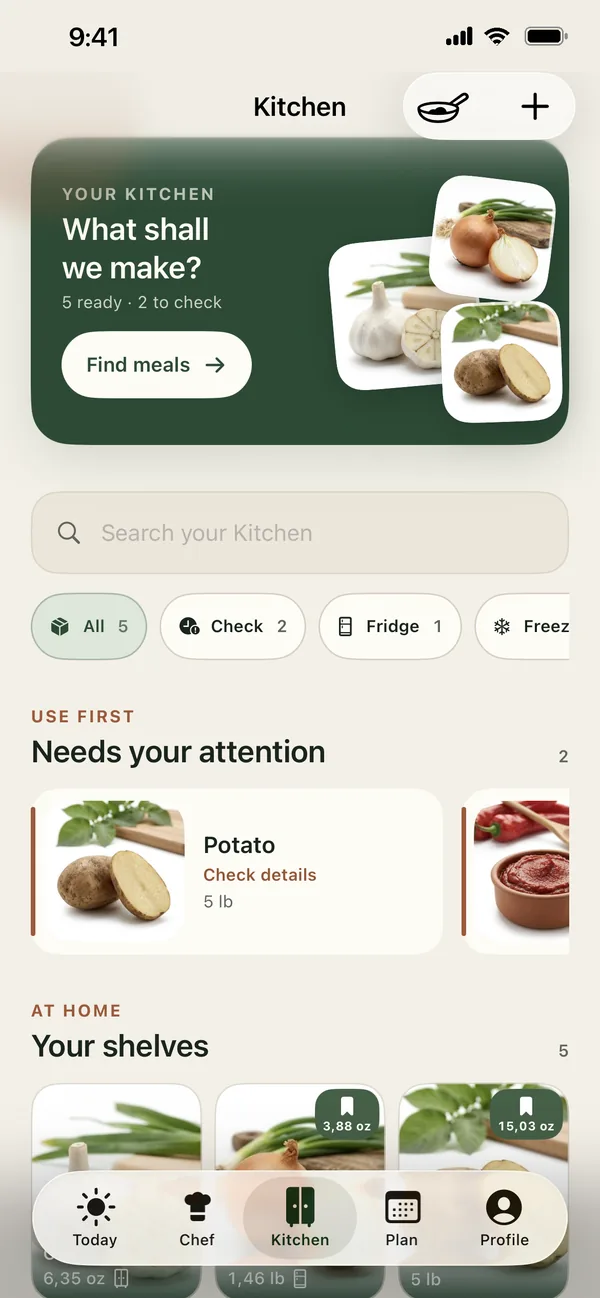
Kitchen in PantryWeave keeps the fridge, the freezer and the pantry apart, and it stays current: mark a meal as cooked and choose whether the app deducts its ingredients from your stock or keeps Kitchen unchanged.
Moved to the freezer, counted as frozen
Decide to freeze the berries you will not eat this week, move them from the fridge to the freezer in Kitchen, and the app counts them as frozen.
The right place for every item
Kitchen shows where each item should be stored. Tick what you buy and move it into Kitchen, and each item goes to the fridge, freezer or pantry it belongs in; you correct an amount only if it differs from the list.
See what needs using soon
Kitchen bases freshness, or the suggested day to use an item, on where it is stored. The Use first shelf shows which items need eating soon.
An estimate, not an official time
The app’s freshness tracking is a reminder based on estimates. The freezer times and packing steps on this page come from the National Center for Home Food Preservation and US state extension services.
Where the advice comes from
All sources read on November 17, 2026. Colorado State cites the National Center’s guide, the New Hampshire chart is adapted from the National Center, and Oklahoma State’s headspace chart gives the same liquid- and dry-pack figures as the New Hampshire one, so where these sources match the National Center they are best read as one line of advice, not separate confirmations.
- National Center for Home Food Preservation (University of Georgia): freezing berries (May 27, 2015: the packs, washing, headspace)
- Illinois Extension: freezing fruits and freezing FAQ (what each pack suits, sugar, freezer times)
- Oklahoma State University Extension: freezing berries at home (preparing each berry, headspace chart; its liquid- and dry-pack figures are the same as in the New Hampshire chart adapted from the National Center)
- Colorado State University Extension: freezing fruits (tray pack, freezer times; its reference is the National Center’s University of Georgia guide)
- University of New Hampshire Extension: freezing fruit (cranberries, frozen berries for jam; its chart is adapted from the National Center)
Frequently asked questions
How do you freeze berries so they don’t stick together?
Use a tray pack. The National Center for Home Food Preservation says to spread the rinsed, completely dried berries in a single layer on a shallow tray, freeze them without the berries touching, and seal them in an airtight container as soon as they freeze. Berries packed straight into containers, it says, will most likely clump together.
Should you wash berries before freezing them?
The sources differ for blueberries. The National Center for Home Food Preservation rinses them and says they need to be completely dry before freezing for best quality, because moisture left on the skin makes the skins tougher. Oklahoma State University Extension says not to wash blueberries for a dry pack, because washing results in a tougher-skinned product, and to wash them before using. For strawberries and raspberries, Oklahoma State washes the berries first.
Do you need sugar to freeze berries?
No. Illinois Extension says sugar is not needed to preserve fruit, though most fruit has a better texture and flavor packed in sugar or syrup. Oklahoma State University Extension says raspberries, blueberries, cranberries and some other fruits give a good-quality product without sugar.
How long do frozen berries last?
Colorado State University Extension says most fruits keep high quality for 8 to 12 months at 0 °F or below, and that unsweetened fruits lose quality faster than those packed in sugar or syrup. Illinois Extension says frozen fruits and vegetables are best used within 8 to 12 months.
How much headspace do frozen berries need?
The National Center for Home Food Preservation says to leave at least ½ inch between the berries and the lid for all types of pack, so the containers don’t break open as they expand. Oklahoma State University Extension gives ½ inch for a dry pack in any container, and up to 1½ inches for berries packed in sugar or syrup, depending on the container. Colorado State University Extension says tray-packed fruit goes into bags or containers with no headspace.
Related guides

See what is in your freezer
Download PantryWeave and see what you have in the freezer, the fridge and the pantry, and what needs using first.

Free to start · iPhone