
How long do sweet potatoes last?
Cured sweet potatoes keep for months in a cool, humid place, but not in the fridge. Here are the storage times and temperatures from Penn State and Iowa State University Extension, and how to freeze sweet potatoes from the National Center for Home Food Preservation.

Short answer: Sweet potatoes cured after harvest keep about 3 to 6 months (Penn State Extension) or 4 to 6 months (Iowa State University Extension) at 55 to 60 °F (13 to 16 °C) and 85 to 90% relative humidity. Both guides are written for growers storing a harvest: the time runs from curing, and neither gives a time from the day you buy them. Do not refrigerate fresh sweet potatoes: below about 50 to 55 °F (10 to 13 °C) they suffer chilling injury, with hard centers and off-flavor. To keep them longer, freeze them cooked by the method of the National Center for Home Food Preservation (NCHFP) below; it gives frozen fruits and vegetables in general about 8 to 12 months at 0 °F (−18 °C).
Sweet potato storage times
The cool-room times assume sweet potatoes that were cured after harvest and are kept in the stated conditions. Both extension guides are written for growers and home gardeners storing a harvest.
| Where | How long (conditions, source) |
|---|---|
| Cool room, cured | 3 to 6 months at 55–60 °F (13–16 °C) and 85–90% humidity (Penn State Extension) |
| Cool room, cured | 4 to 6 months, same conditions (Iowa State University Extension) |
| Fridge | Do not refrigerate fresh sweet potatoes (Penn State Extension) |
| Freezer (NCHFP) | About 8 to 12 months at 0 °F (−18 °C), the general time for fruits and vegetables prepared and packaged correctly; method below (NCHFP) |
Why sweet potatoes don’t belong in the fridge
Penn State Extension says not to refrigerate fresh sweet potatoes. Below about 50 to 55 °F (10 to 13 °C) they suffer chilling injury, which shows as hard cores and off-flavor. Penn State names chilling injury as the likely cause of a hard center after cooking. Iowa State University Extension adds that below 55 °F (13 °C) the flesh may become discolored.
Too warm: sprouting and moisture loss
Warmth is the other problem. Iowa State says storage temperatures above 60 °F (16 °C) may stimulate sprouting, and Penn State says that above about 65 °F (18 °C) sweet potatoes sprout and lose moisture. To slow sprouting, Penn State suggests about 55 to 58 °F (13 to 14 °C) and a dark place.
What curing does
Curing is a short warm, humid rest after harvest. Iowa State recommends curing sweet potatoes for 1 week at 80 to 85 °F (27 to 29 °C) and 90 to 95% relative humidity; Penn State gives 4 to 7 days. Curing heals minor cuts and bruises, which lengthens storage life, and it improves the flavor as starches turn into sugars. The NCHFP’s freezing method starts with sweet potatoes cured for at least one week.
How PantryWeave helps you keep track
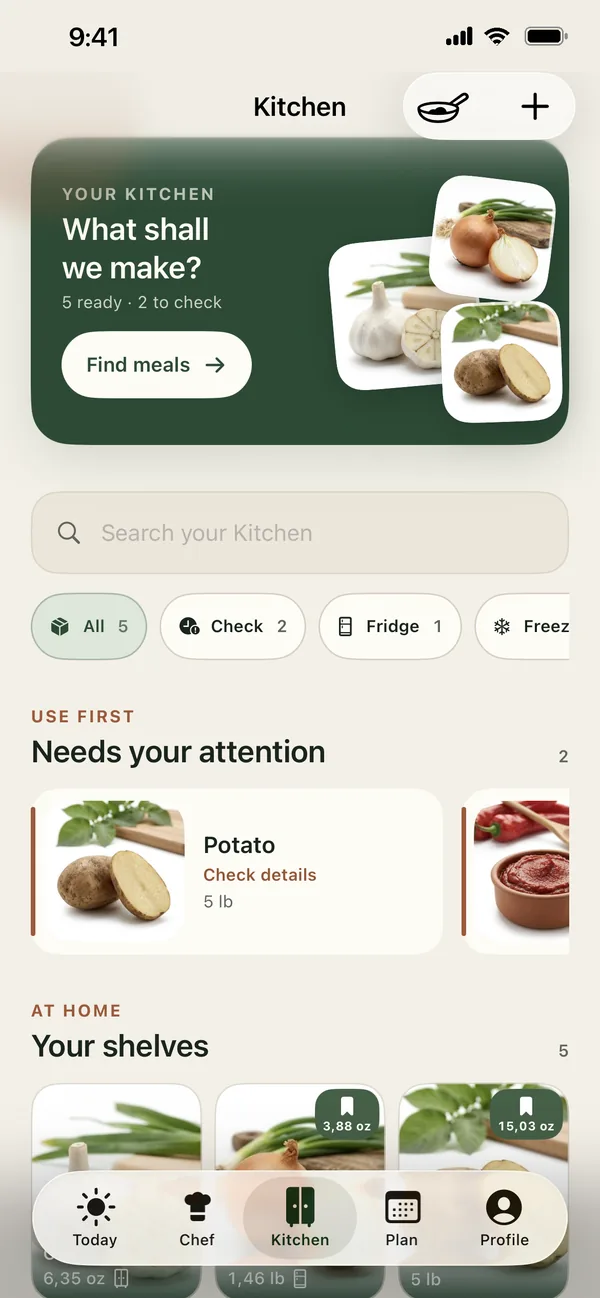
Kitchen in PantryWeave keeps the fridge, the freezer and the pantry apart, and it stays current: mark a meal as cooked and choose whether the app deducts its ingredients from your stock or keeps Kitchen unchanged.
A suggested place for every item
Kitchen suggests where each item is stored and, for items with freshness tracking, when to use it; you can change both. Tick what you buy and move it into Kitchen; you correct an amount only if it differs from the list.
See what needs using soon
For items with freshness tracking, the app suggests a day to use them by, based on where they are stored, and the Use first shelf shows which items need eating soon.
How to freeze sweet potatoes
The NCHFP freezes sweet potatoes cooked, not raw:
- Choose medium to large sweet potatoes that have been cured for at least one week. Sort them by size and wash them.
- Cook them until almost tender in water, in steam, in a pressure cooker or in the oven.
- Let them stand at room temperature until cool.
- Peel them, then cut them in halves, slice or mash them.
- To stop whole sweet potatoes or slices darkening, you can dip them for 5 seconds in ½ cup (120 ml) of lemon juice mixed with 1 quart (about 1 liter) of water. For mashed sweet potatoes, mix 2 tablespoons (30 ml) of orange or lemon juice into each quart (about 1 liter) of mashed sweet potatoes.
- Pack them into containers, leaving ½ inch (about 1.3 cm) of headspace, then seal and freeze.
For baked sweet potatoes, the NCHFP heats them unpeeled in the oven at 350 °F (175 °C) until slightly soft, cools and peels them, wraps each one in aluminum foil and freezes them in polyethylene bags. Finish baking them in the foil at 350 °F (175 °C) just before serving.
Cooked sweet potato leftovers
Sweet potatoes you have already cooked to eat, such as leftover mash or a casserole, are leftovers: see our leftover storage chart for their fridge and freezer times. The 8 to 12 months above is the NCHFP’s general time for vegetables prepared and packaged by its freezing method. For other produce, see fridge or pantry?
Where the information comes from
Read on November 15, 2026.
- Penn State Extension: sweetpotato curing and storage (updated November 5, 2025; storage conditions and 3 to 6 months, chilling injury, sprouting, the fridge, curing)
- Iowa State University Extension: how long can I store sweet potatoes? (updated July 24, 2024; 4 to 6 months)
- Iowa State University Extension: how do I harvest and store sweet potatoes? (updated July 24, 2024; curing, storage temperature, sprouting, discoloring)
- National Center for Home Food Preservation: freezing sweet potatoes (cooked and baked methods)
- National Center for Home Food Preservation: how long can I store frozen foods (fruits and vegetables, 8 to 12 months)
Frequently asked questions
Should you refrigerate sweet potatoes?
Not fresh, raw ones. Penn State Extension says not to refrigerate fresh roots, because storage below about 50 to 55 °F (10 to 13 °C) causes chilling injury: hard cores and off-flavor.
How long do sweet potatoes last at room temperature?
The extension guides give storage times only for 55 to 60 °F (13 to 16 °C). Above about 65 °F (18 °C), Penn State says sweet potatoes sprout and lose moisture. Neither guide gives a storage time for a warm kitchen.
Can you freeze sweet potatoes?
Yes, cooked. The NCHFP cooks sweet potatoes until almost tender, cools and peels them, then freezes them halved, sliced or mashed, or wraps partly baked ones in foil. It gives frozen fruits and vegetables in general about 8 to 12 months at 0 °F (−18 °C).
Why is my sweet potato hard in the middle after cooking?
Penn State Extension names chilling injury as the likely cause of a hard center after cooking: the roots were kept too cold. Store them warmer and use those roots soon.
Related guides

Let Kitchen show where it goes
Download PantryWeave and see where each item in your kitchen should be stored.

Free to start · iPhone