
Family grocery list: how to make one
Family grocery list: University of Tennessee Extension’s publication W1353F, Grocery List Basics: Plan To Save, gives its steps under three headings: “Plan it,” “Write it” and “Stick to It”. Below: each step in its own words, its sample list, and where to plan the family week.

Short answer: University of Tennessee Extension says: “Work with anyone who lives in your house to create your grocery list. This way, you can buy food that everyone enjoys.” It also says: “Keep your grocery list in a common place and add to it when you notice something is running low. Ask other family members to add to it too.”
Why make a grocery list?
University of Tennessee Extension says: “Making a grocery list before shopping can help you save time and money while keeping you focused on healthy eating. Before going to the store, plan and write down your list. When you're shopping, remember to stick to your list.”
It also says: “Creating a grocery list prior to shopping can save time and money while promoting healthier eating habits. Planning and writing down your list before heading to the store helps maintain focus. It's essential to adhere to the list during your shopping trip.”
Plan it: the steps before you write the list
University of Tennessee Extension gives these steps under “Plan it”:
- “Plan each meal for the next week or two for your family. For more details on meal planning, check out the UT Extension publication W1353 Meal Planning Made Easy.”
- “Ensure your meals are balanced (carbohydrates, protein, and fat) according to MyPlate. You can learn more about MyPlate online.”
- “Work with anyone who lives in your house to create your grocery list. This way, you can buy food that everyone enjoys.”
- “Write down everything you need for meals and how much of each item you require.”
- “Keep your grocery list in a common place and add to it when you notice something is running low. Ask other family members to add to it too.”
- “Check your pantry, refrigerator, and freezer first to avoid buying items you already have at home.”
- “Create a basic list of items you buy regularly, so you don't forget anything.”
- “Choose recipes with affordable ingredients or look for foods on sale to save money.”
- “Search for coupons, store ads, and online deals for the items on your list and for frequently used staple foods.”
- “Sign up for store reward cards for extra savings.”
- “Remember that coupons and ads are only good deals if you actually need the items, can afford them, and will use them before they expire.”
- “Use your grocery store's app or website. Store rewards can track your purchases, and you might be able to quickly generate a list based on what you usually buy.”
Write it: what goes on the family grocery list
University of Tennessee Extension gives these steps under “Write it”:
- “After writing your list, check it to ensure it fits your food budget.”
- “Highlight items on your list for which you have coupons or that are on sale, so you don't forget to use them while shopping.”
- “Consider using a grocery list or meal planning app on your smartphone.”
- “Include all ingredients needed for your meals and snacks in your shopping list. Be sure to specify the amounts you need for each ingredient.”
- “Organize your grocery list by category to make shopping easier and quicker. Some grocery list apps can do this automatically.”
- “If you're using online grocery shopping, create your cart and use that to shop in-store or to order groceries for delivery or pick-up.”
Stick to It: at the store
University of Tennessee Extension gives these steps under “Stick to It”:
- “While shopping, make sure to stick to your list. Get what you need and leave! This saves time and money.”
- “Avoid impulse buys while shopping. If you feel tempted to buy extra items, consider how they fit into your weekly meal plan and whether you'll use them before they spoil.”
- “Using online grocery shopping can seem like it saves money, but make sure to stick to your list when adding new items to your cart.”
A sample family grocery list
Page 2 of University of Tennessee Extension’s publication is a sample list printed in two columns: PRODUCE, MEAT, PANTRY and FREEZER on the left; GRAINS, PROTEINS, DAIRY and OTHER on the right. These are its headings and items, with its amounts, left column first, each section in the order printed. Page 3 of University of Tennessee Extension’s publication is a blank template with the same headings.
PRODUCE
- 2 cucumbers
- 1 package of cherry tomatoes
- 1 bag of granny smith apples
- 1 bag of spinach
- 1 zucchini
- 1 bag of baby bella mushrooms
- 1 package of small red potatoes
- 2 avocados
MEAT
- 1 pound of ground turkey
- 1 package of lean strip steak
- 1/2 pound of low sodium turkey breast deli meat
PANTRY
- 1 can of chickpeas
- 1 can of low sodium black beans
- 1 container of quick oats
- 1 container of natural peanut butter
- 1 bag of natural cashews
- 1 bag of brown rice
FREEZER
- 1 bag of frozen peas
- 1 bag of frozen diced potatoes
- 1 bag of frozen corn
- 1 bag of frozen broccoli
GRAINS
- 1 loaf of Sourdough bread
PROTEINS
No items are written under this heading in the sample.
DAIRY
- 1-gallon low-fat milk
- 1 container of fat free Greek plain yogurt
OTHER
- 1/2 gallon of 100% juice
A printable list with a box for each part of the store is in our guide grocery list template: a printable grocery list for the week. Planning the family week is in our guide family meal plans: one weekly plan that works for everyone at your table.
How PantryWeave helps
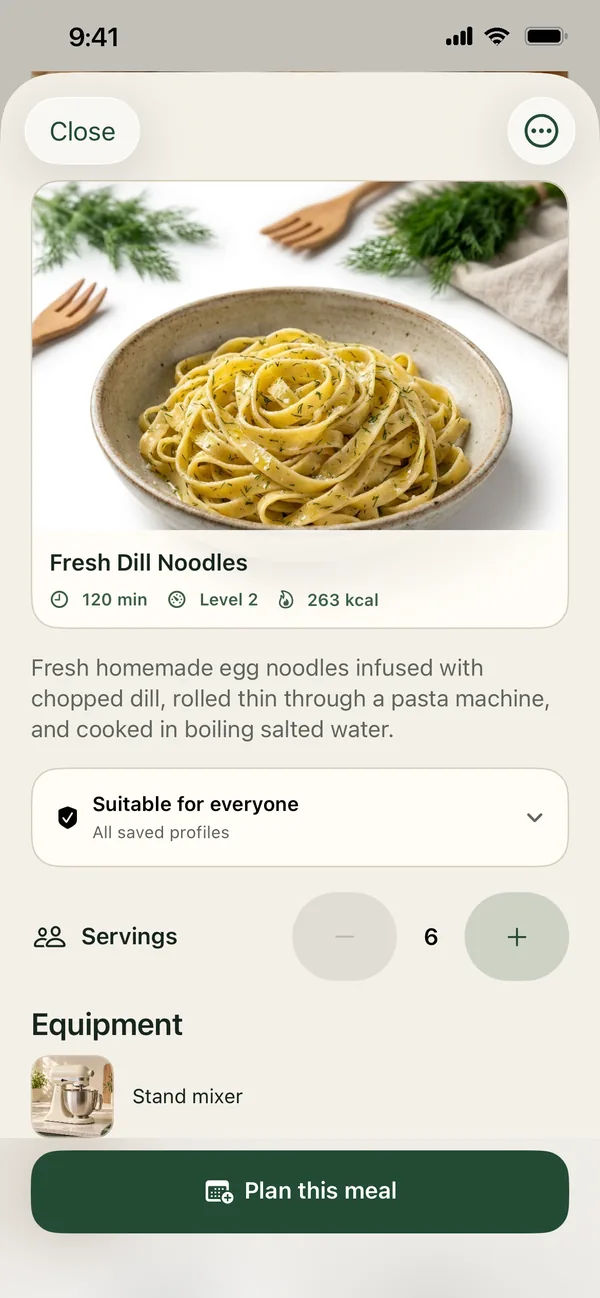
PantryWeave keeps every person’s rules in one place and checks each suggestion against all of them.
One profile per person
In Profile, each person gets their own Allergens, Diet and ingredient rules: Never include, Prefer not to include and Avoid for now.
Profile-checked recipes
Suggestions are checked against every saved profile at once. Review the ingredient-check result for each person.
Starts from your kitchen
Recipes are matched to what you added in Kitchen. Each result shows Ready or how many items are left to buy.
A list for the gap only
Recipe amounts are combined and what is already in Kitchen is subtracted, so the list only holds what is missing.
One planner for the whole household. One person plans for the household in one app, and suggestions are checked against the rules set in Profile.
Chef and the grocery list. Chef suggests recipes that suit the people you choose in Who is eating? and the food you have. PantryWeave builds the grocery list for you.
Free to start. You can start free.
Plan family meals from your pantry
Where the steps come from
- University of Tennessee Extension: W1353F, Grocery List Basics: Plan To Save (published December 9, 2025; Christopher Sneed, Ann Berry, Kristen Johnson and Kristin Riggsbee; steps and sample list; read on November 19, 2026)
Frequently asked questions
How do you make a family grocery list?
University of Tennessee Extension says: “Keep your grocery list in a common place and add to it when you notice something is running low. Ask other family members to add to it too.” It also says: “Write down everything you need for meals and how much of each item you require.”
What should you check before writing a grocery list?
University of Tennessee Extension says: “Check your pantry, refrigerator, and freezer first to avoid buying items you already have at home.”
How do you keep a grocery list within a food budget?
University of Tennessee Extension says: “After writing your list, check it to ensure it fits your food budget.” It also says: “Choose recipes with affordable ingredients or look for foods on sale to save money.”
How do you stick to a grocery list?
University of Tennessee Extension says: “While shopping, make sure to stick to your list. Get what you need and leave! This saves time and money.” It also says: “Avoid impulse buys while shopping. If you feel tempted to buy extra items, consider how they fit into your weekly meal plan and whether you'll use them before they spoil.”
Related guides

Plan a week everyone at your table can eat
Download PantryWeave on the App Store and plan your first week from what you already have.

Free to start · iPhone