
Does coconut oil go bad?
Does coconut oil go bad? The USDA’s FoodKeeper gives it 3 years in the pantry, and does not recommend the fridge or the freezer: both make it difficult to use. Below: how that compares with some other oils in FoodKeeper, and how to store it.

Short answer: The USDA’s FoodKeeper gives coconut oil a shelf life of 3 years in the pantry; it gives olive or vegetable oil 6 to 12 months in the pantry from the date of purchase. FoodKeeper does not recommend keeping coconut oil in the fridge or the freezer: “Refrigeration not recommended - makes it difficult to use,” and the same for freezing. Other pantry staples are in our guide how long pantry staples keep.
Coconut oil shelf life, next to other oils
Some of the oil rows in the USDA’s FoodKeeper, each in FoodKeeper’s own columns. A dash means FoodKeeper gives no time there. On a phone, scroll the chart sideways for the fridge column.
| Oil | In the pantry | In the pantry, after opening | In the fridge |
|---|---|---|---|
| Coconut oil | 3 years | — | “Refrigeration not recommended - makes it difficult to use.” |
| Olive or vegetable oil | 6 to 12 months, from the date of purchase | 3 to 5 months | 4 months, after opening |
| Nut oils | 6 to 12 months, from the date of purchase | 3 to 8 months | 6 to 8 months, after opening |
| Sesame oil | 2 years, from the date of purchase | 6 months | — |
| Avocado oil | 2 years, from the date of purchase | 6 months | — |
| Canola, sunflower or grapeseed oil | 1 year, from the date of purchase | — | — |
| Almond oil | 1 year, from the date of purchase | — | 2 years, from the date of purchase |
FoodKeeper’s 3 years for coconut oil is a pantry time; unlike the other oils in the chart, FoodKeeper does not give it in its from-the-date-of-purchase column and does not say when the 3 years start, so the times may not be counted the same way. For the freezer, FoodKeeper’s coconut oil row says: “Freezing not recommended - makes it difficult to use.” FoodKeeper also lists vegetable oil sprays and solid shortening, among others, which are not in this chart. Our guide how long pantry staples keep gives the same 3 years.
Should coconut oil go in the fridge?
No, according to the USDA’s FoodKeeper. Its coconut oil row says: “Refrigeration not recommended - makes it difficult to use.” For the freezer, it says: “Freezing not recommended - makes it difficult to use.”
That differs from some other oils. For cooking oils in general, University of Connecticut (UConn) Extension says refrigeration benefits most oils. For olive oil, UConn gives about 6 months in a cool, dark pantry and up to a year in the refrigerator, while FoodKeeper gives opened olive or vegetable oil 3 to 5 months in the pantry and 4 months in the fridge. UConn says unopened peanut, corn and other vegetable oils keep for at least a year, and 4 to 6 months once opened, and that walnut and sesame oil kept in the refrigerator stay fresh for 2 to 4 months; FoodKeeper gives opened sesame oil 6 months in the pantry.
How should you store coconut oil?
In the pantry: that is where FoodKeeper gives its 3 years. UConn Extension’s advice is for cooking oils in general and gives no time for coconut oil: “Different oils stay fresh for different amounts of time, but you must store them all carefully. They should be tightly covered and stored in the dark away from heat. The less access to air, the fresher they will stay.”
How PantryWeave keeps track of your kitchen
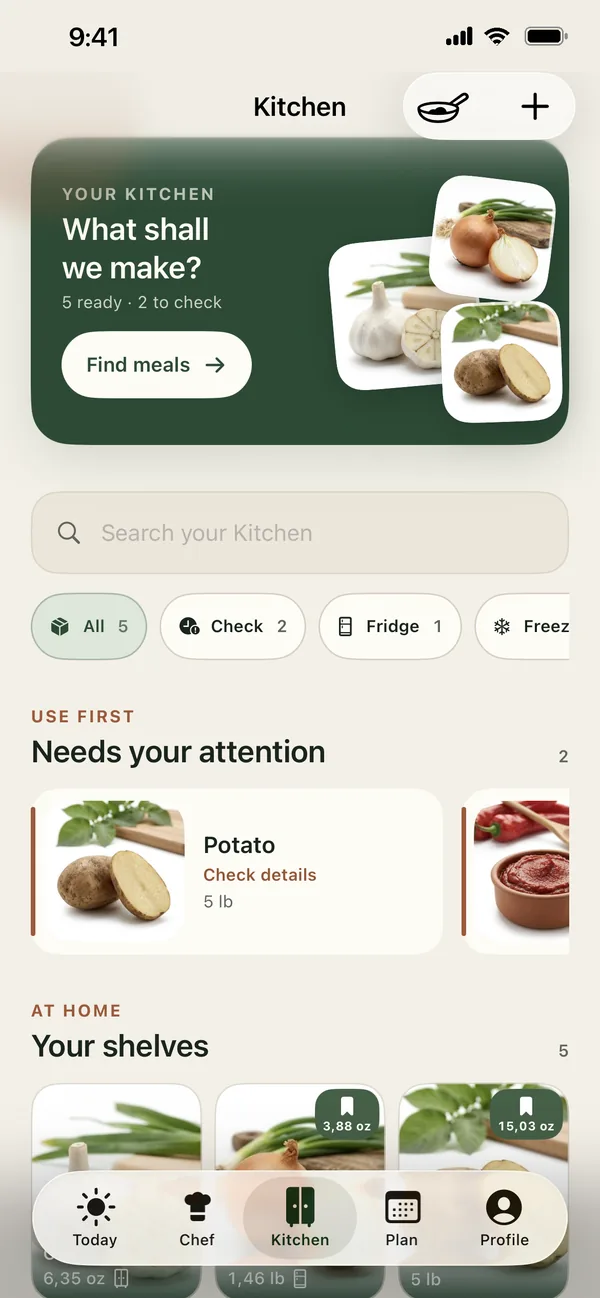
PantryWeave keeps track of your kitchen: it plans your meals from what is already in your Kitchen, and the stock stays current: when you mark a meal as cooked, you choose whether the app deducts its ingredients from Kitchen or keeps Kitchen unchanged.
Every item in its place
Kitchen shows whether each item belongs in the pantry, the fridge or the freezer.
Put the shopping away in one step
Put the shopping away in one step: tick what you buy in the store and send it straight to Kitchen, where each item lands in its pantry, fridge or freezer spot. You correct a quantity only if it differs from the list.
Tracked by where it is kept
Kitchen tracks each item’s freshness, or a suggested day to use it by, according to where you keep it, and the Use first shelf brings forward what needs eating soon.
A reminder, not a label date
Freshness in the app is an estimate meant as a reminder, not a label date. The oil times on this page come from the USDA’s FoodKeeper and University of Connecticut Extension, and checking the food itself still matters.
Where the times come from
All sources read on November 18, 2026.
- USDA FoodKeeper (coconut oil; olive or vegetable oil; nut oils; sesame, avocado, canola, sunflower, grapeseed and almond oil; FoodKeeper data file, version 128, as archived on July 2, 2025; read on November 18, 2026)
- University of Connecticut (UConn) Extension: Heart Healthy Cooking Oils (updated October 1, 2019: storage of cooking oils in general; olive, vegetable, walnut and sesame oil; read on November 18, 2026)
Frequently asked questions
Does coconut oil go bad?
The USDA’s FoodKeeper gives coconut oil 3 years in the pantry. For comparison, it gives olive or vegetable oil 6 to 12 months in the pantry from the date of purchase.
Should coconut oil be refrigerated?
No, according to the USDA’s FoodKeeper: “Refrigeration not recommended - makes it difficult to use.”
Can you freeze coconut oil?
The USDA’s FoodKeeper does not recommend it: “Freezing not recommended - makes it difficult to use.”
How should you store coconut oil?
FoodKeeper gives its 3 years for the pantry. For cooking oils in general, University of Connecticut (UConn) Extension says they should be tightly covered and stored in the dark away from heat, and that the less access to air, the fresher they will stay; it gives no time for coconut oil.
Related guides

Know what needs using first
Download PantryWeave and see what is in your fridge, freezer and pantry, and what needs using first.

Free to start · iPhone