
Does balsamic vinegar go bad?
The USDA’s FoodKeeper gives balsamic vinegar 3 to 5 years in the pantry from the date of purchase and 18 months in the fridge after opening; for vinegar in general, the university charts in the table below (North Dakota State, Pacific Northwest, Ohio State, Nebraska, New Mexico State) give 2 years unopened in the cupboard or pantry, and opened 12 months (North Dakota State, Pacific Northwest, Ohio State), 1 year (Nebraska) or 2 years (New Mexico State). Below: the charts side by side, the fridge question, the best-by date, cloudiness and sediment, storage, balsamic vinaigrette and home canning.

Short answer: It keeps for years. The USDA’s FoodKeeper gives balsamic vinegar 3 to 5 years in the pantry from the date of purchase and 18 months in the refrigerator after opening. Iowa State University Extension’s AnswerLine, citing the Vinegar Institute, says vinegar in general has an “almost indefinite” shelf life and does not need refrigeration. For vinegar in general, North Dakota State, the Pacific Northwest guide, Ohio State, Nebraska and New Mexico State give 2 years unopened in the cupboard or pantry; opened, North Dakota State, the Pacific Northwest guide and Ohio State give 12 months, Nebraska 1 year and New Mexico State 2 years. Our guide does vinegar go bad? puts these five charts side by side with FoodKeeper’s vinegar row and three more university extension charts. Honey, rice and other pantry staples are in our guide does it go bad?
Balsamic vinegar and vinegar shelf life, by source
Each source’s own row, in its own words, with the storage place it names. Only FoodKeeper has a row for balsamic vinegar; the university charts list vinegar in general.
| Source and row | Unopened, or from the date of purchase | Opened |
|---|---|---|
| The USDA’s FoodKeeper: balsamic vinegar | 3 to 5 years in the pantry, from the date of purchase | 18 months in the refrigerator, after opening |
| The USDA’s FoodKeeper: vinegar | 2 years in the pantry, from the date of purchase | — |
| North Dakota State University Extension, cupboard storage chart: vinegar | 2 years, unopened | 12 months |
| Pacific Northwest Extension guide, cupboard times for best quality, at 70°F: vinegar | 2 years, unopened | 12 months |
| Ohio State University Extension, pantry food storage chart: vinegar | 2 years, unopened | 12 months |
| Nebraska Extension, room temperature in a pantry or cupboard (50 to 70°F): vinegar | 2 years, unopened | 1 year |
| New Mexico State University, pantry column: vinegar | 2 years, unopened | 2 years |
FoodKeeper counts its pantry times from the date of purchase and gives opened balsamic vinegar a time only in the refrigerator. The university times are for the cupboard or pantry; the Pacific Northwest guide calls its times approximate cupboard times for best quality and useful guidelines, not set rules.
The North Dakota State, Pacific Northwest and Ohio State vinegar rows are worded almost alike, down to the note that a slightly cloudy appearance does not affect quality: Ohio State lists North Dakota State’s guide and a Kansas State chart among its references, and the Pacific Northwest table is adapted from materials prepared by Kansas State University, the USDA and University of Missouri Extension, so the three read as one strand.
Nebraska Extension, which also lists North Dakota State’s guide among its references, gives vinegar 2 years unopened and 1 year opened; New Mexico State University gives 2 years both unopened and opened. Ohio State also says vinegars have a long-lasting shelf life and may be kept in a cool, dark place almost indefinitely.
Does balsamic vinegar need to be refrigerated?
FoodKeeper’s balsamic vinegar row gives a time after opening only for the refrigerator, 18 months, and none for the pantry. Iowa State University Extension’s AnswerLine quotes the Vinegar Institute on vinegar in general: “Because of its acid nature, vinegar is self-preserving and does not need refrigeration.” The university charts in the table give their opened vinegar times for the cupboard or pantry: 12 months (North Dakota State, the Pacific Northwest guide at 70°F, Ohio State), 1 year (Nebraska, at 50 to 70°F) or 2 years (New Mexico State).
Does balsamic vinegar expire? What the best-by date means
Iowa State University Extension’s AnswerLine says the “Best By” date on vinegar is the manufacturer’s estimate of how long the vinegar will remain at peak quality, and that by convention most manufacturers set it two years from the production date. It adds that the acidity of vinegar does not change unless moisture or water gets into the container.
Cloudiness, color and sediment
Iowa State’s AnswerLine quotes the Vinegar Institute: “Aesthetic changes such as color, haze, or sediment may be observed in other types of vinegars.” It describes each change.
- Cloudiness: once the bottle is opened and exposed to air. AnswerLine says cloudiness does not affect the vinegar’s quality or flavor, and straining it through a coffee filter may clear it. The North Dakota State, Pacific Northwest and Ohio State charts say a slightly cloudy appearance does not affect quality. New Mexico State University’s guide says: “If a cloudy mass develops in opened vinegar, do not use.”
- Color: AnswerLine says residual sugars and amino acids in many fruit vinegars may cause browning over time, likely years in coming, and that a change in color likely indicates a change in taste as well.
- Sediment: AnswerLine says vinegars that are less filtered can form sediment over time as the particles settle, and to strain the vinegar through a coffee filter set inside a fine-mesh strainer before using it.
How to store balsamic vinegar
- Where: Iowa State’s AnswerLine says to store vinegars in a cool, dark cupboard away from direct heat or sunlight.
- Container: AnswerLine says vinegar should only be stored in glass, plastic or non-reactive containers, and that the lid should be secured and replaced immediately after use to reduce the oxygen that reaches the vinegar. New Mexico State University’s guide says to keep vinegar tightly closed and that vinegar in glass containers has a longer storage time.
Does balsamic vinaigrette go bad?
The USDA’s FoodKeeper has no balsamic vinaigrette row. For vinaigrette salad dressing it gives 6 months in the pantry from the date of purchase and 4 weeks in the refrigerator after opening, and says freezing is not recommended. For homemade vinaigrette it gives 2 to 3 weeks in the refrigerator.
For commercial bottled salad dressings it gives 10 to 12 months in the pantry from the date of purchase and 1 to 3 months in the refrigerator after opening, and says shelf-stable commercial salad dressing can be stored at room temperature after opening and that refrigeration “ensures that commercial sauces and condiments stay fresh for a longer period of time.”
University charts list bottled salad dressings in general. North Dakota State University Extension gives them the same times as FoodKeeper, 10 to 12 months unopened and 1 to 3 months opened, and says to refrigerate after opening; Ohio State University Extension gives 10 to 12 months unopened and 3 months opened, refrigerated after opening. University of Kentucky Cooperative Extension gives bottled salad dressing 3 months in the refrigerator and says it freezes poorly.
Balsamic vinegar in home canning
Penn State Extension lists balsamic among the specialty vinegars and says to use these only when specified in a research-tested recipe, and to read the label for any additional storage requirements. It notes that some balsamic vinegars are 6–7% acidity and says to stay in the range of 5–7% acidity for home food preservation.
The UC Master Food Preservers of Central Sierra say specialty vinegars such as balsamic should only be used when a research-based recipe says to use one. Their piece covers the two most common vinegars, a 2.5% acidity pickling vinegar base and specialty vinegars in nearly the same sentences as Penn State’s, so the two read as one strand.
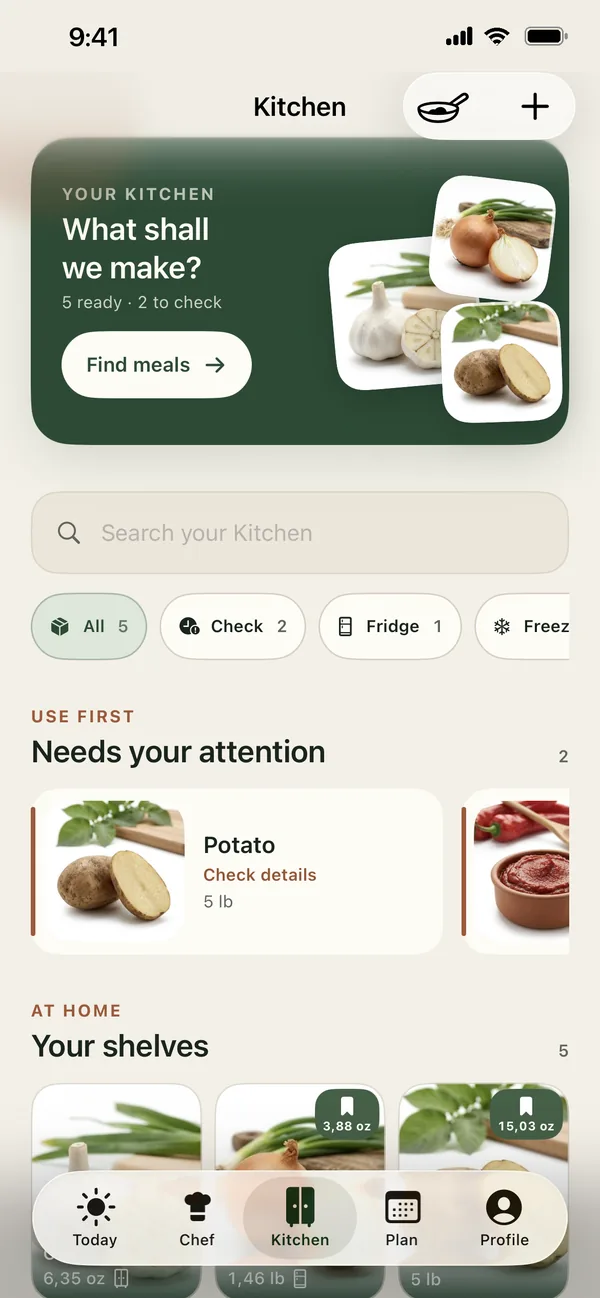
How PantryWeave keeps track of your pantry
PantryWeave plans your meals from what is already in your Kitchen, and the stock stays current: when you mark a meal as cooked, you choose whether the app deducts its ingredients from Kitchen or keeps Kitchen unchanged.
Every item in its place
Kitchen shows whether each item belongs in the pantry, the fridge or the freezer.
Put the shopping away in one step
Tick what you buy in the store and send it straight to Kitchen, where each item lands in its pantry, fridge or freezer spot. You correct a quantity only if it differs from the list.
Tracked by where it is kept
Kitchen follows each item’s freshness, or a suggested day to use it by, according to where you keep it, and the Use first shelf brings forward what needs eating soon.
A reminder, not a label date
Freshness in the app is an estimate meant as a reminder. The shelf lives on this page come from official sources, and checking the food itself still matters.
Where the times come from
All sources read on November 18, 2026.
- USDA FoodKeeper (balsamic vinegar, vinegar; vinaigrette salad dressing, homemade vinaigrette and commercial bottled salad dressings; FoodKeeper data file, version 128, as archived on July 2, 2025; read on November 18, 2026)
- Iowa State University Extension and Outreach, AnswerLine: vinegar shelf life (May 11, 2021, reviewed May 2026: shelf life citing the Vinegar Institute, best-by date, changes, storage; read on November 18, 2026)
- North Dakota State University Extension: food storage guide (FN579, reviewed January 2023: vinegar, salad dressings; read on November 18, 2026)
- Pacific Northwest Extension: guide PNW612 on storing food (revised March 2023: vinegar; read on November 18, 2026)
- Ohio State University Extension: pantry food storage (HYG-5401, December 9, 2010: vinegar, salad dressings; read on November 18, 2026)
- Nebraska Extension: home food storage chart (updated in 2026: vinegar; read on November 18, 2026)
- New Mexico State University: guide E-118 on storing food (revised April 2025: vinegar; read on November 18, 2026)
- University of Kentucky Cooperative Extension: recommended food storage times (FCS3-595, revised September 2026: bottled salad dressing; read on November 18, 2026)
- Penn State Extension: advice about vinegar (updated July 8, 2026: specialty vinegars and acidity; read on November 18, 2026)
- UC Master Food Preservers of Central Sierra: about that vinegar (November 27, 2024: specialty vinegars; read on November 18, 2026)
Frequently asked questions
Does balsamic vinegar go bad?
It keeps for years. The USDA’s FoodKeeper gives balsamic vinegar 3 to 5 years in the pantry from the date of purchase and 18 months in the refrigerator after opening. Iowa State University Extension’s AnswerLine, citing the Vinegar Institute, says vinegar in general has an “almost indefinite” shelf life.
Does balsamic vinegar expire?
The date on the bottle is about quality. Iowa State University Extension’s AnswerLine says the “Best By” date on vinegar is the manufacturer’s estimate of how long the vinegar will remain at peak quality, and that by convention most manufacturers set it two years from the production date.
Does balsamic vinegar need to be refrigerated after opening?
The balsamic vinegar row in the USDA’s FoodKeeper gives a time after opening only for the refrigerator, 18 months, and none for the pantry. Iowa State University Extension’s AnswerLine quotes the Vinegar Institute on vinegar in general: “Because of its acid nature, vinegar is self-preserving and does not need refrigeration.” The university charts in the table give opened vinegar 12 months (North Dakota State, the Pacific Northwest guide, Ohio State), 1 year (Nebraska) or 2 years (New Mexico State) in the cupboard or pantry.
Why is my balsamic vinegar cloudy or full of sediment?
Iowa State’s AnswerLine says vinegar can turn cloudy once it has been opened and exposed to air, that cloudiness does not affect its quality or flavor, and that straining it through a coffee filter may clear it. It says less filtered vinegars can form sediment over time as the particles settle, and to strain such vinegar through a coffee filter set inside a fine-mesh strainer. New Mexico State University’s guide says: “If a cloudy mass develops in opened vinegar, do not use.”
Does balsamic vinaigrette go bad?
The USDA’s FoodKeeper has no balsamic vinaigrette row. For vinaigrette salad dressing it gives 6 months in the pantry from the date of purchase and 4 weeks in the refrigerator after opening, and says freezing is not recommended; for homemade vinaigrette it gives 2 to 3 weeks in the refrigerator.
Related guides

Know what is on your shelves
Download PantryWeave and see what you have in the pantry, fridge and freezer, and what needs using first.

Free to start · iPhone