
Best before dates: what do they mean?
GOV.UK says the best before date tells you when the food might start to reduce in quality, and Health Canada says you can buy and eat foods after it has passed, though they may have lost some freshness, and that the date applies to unopened products only. Below: what the date means in the UK, Canada, Australia and New Zealand and the US, in each agency’s words, which foods carry it, how to read it, and how it differs from a use-by date.

Short answer: GOV.UK says best before dates relate to quality: the best before date tells you when the food might start to reduce in quality. Health Canada says you can buy and eat foods after the best before date has passed, though they may have lost some freshness, flavour and nutritional value; it adds that the date applies to unopened products only, and that once a food is opened its shelf life may change. In the US, the FDA and the USDA recommend that the food industry voluntarily use the quality-based “Best if Used By” label.
What a best before date means, by country
Each agency’s own words, with the foods and the exceptions it names. On a phone, scroll the chart sideways for the last columns.
| Agency | What the date means | Which foods carry it | After the date |
|---|---|---|---|
| GOV.UK (UK) | Tells you when the food might start to reduce in quality; also sometimes shown as “best before end” (BBE) | Most prepacked foods must show a use-by or a best before date; best before dates should appear on products such as frozen, dried and tinned foods and cheese | The food may not be of the same quality |
| Health Canada | Information about the freshness and potential shelf life of the unopened food you are buying | Must appear on pre-packaged foods that will keep fresh for 90 days or less; foods with an anticipated shelf life of more than 90 days do not need one | You can buy and eat the food; it may have lost some freshness, flavour and nutritional value, and its texture may have changed |
| Food Standards Australia New Zealand | Foods may have lost some quality after it | Most foods; not needed on foods with a shelf life of two years or longer, such as some canned foods; bread with a shelf life of less than seven days can carry a baked-on or baked-for date | You can still eat foods for a while; they can legally be sold provided the food is fit for human consumption |
| FDA and USDA (US) | “Best if Used By”: notes the date after which quality may decline but the product may still be consumed | Recommended for voluntary use by the food industry; other phrases such as “Sell By” or “Use By” are not prohibited if they are truthful and not misleading | The FDA’s words: quality may decline, but the product may still be consumed |
Can you eat food after the best before date?
Health Canada says you can buy and eat foods after the best before date has passed. It says the food may have lost some of its freshness, flavour and nutritional value, and its texture may have changed, and that best before dates apply to unopened products only: once a food is opened, its shelf life may change. Food Standards Australia New Zealand says you can still eat foods for a while after the best-before date, but they may have lost some quality.
GOV.UK says that after the best before date the food may not be of the same quality. It also says that if you do not store food properly, it could reduce in quality before the best before date. It says that after the best before date you can use sight, taste or smell to decide whether you should eat something, for example by looking for visible mould on bread, tasting biscuits or crisps to see if they are stale, or smelling some dairy products to see if they have soured. Health Canada says in its tips for leftovers: “You cannot tell if food is contaminated by its look, smell or taste.” On its date label page it says: “If in doubt, throw it out.”
Best before vs use by: what is the difference?
GOV.UK says best before dates relate to quality, and that use-by dates must be shown on foods that go off quickly, such as meat products and ready-to-eat salads, and that eating food after the use-by date could make you ill. It says manufacturers decide whether a product carries a use-by date or a best before date, depending on the type of food. Food Standards Australia New Zealand says foods should not be eaten after the use-by date and cannot legally be sold after it, while foods with a best-before date can legally be sold after that date provided the food is fit for human consumption.
In Canada, Health Canada says a use by date may appear instead of “best before” on pre-packaged fresh yeast only. It says an expiration date must appear on formulated liquid diets, foods for use in a very low-energy diet, meal replacements, nutritional supplements and infant formulas, and that if the expiration date has passed, you should throw away the food. How long leftovers keep in the fridge and freezer, from official charts, is in our guide how long are leftovers good for?
Which foods have a best before date?
GOV.UK says best before dates should appear on products such as frozen foods (for example peas, chips and ice cream), dried foods (for example pasta and rice), tinned foods (for example baked beans and canned tomatoes) and cheese. Food Standards Australia New Zealand says most foods have a best-before date, that foods with a shelf life of two years or longer, such as some canned foods, do not need one, and that bread with a shelf life of less than seven days can carry a baked-on or baked-for date instead. Health Canada says the date must appear on pre-packaged foods that will keep fresh for 90 days or less.
How do you read a best before date in Canada?
Health Canada says the date must be identified with the words “best before” in English and French. If the year is included, it comes first, followed by the month and then the day, and the month is written in both official languages or as a two-letter bilingual symbol: JA for January, FE for February, MR for March, AL for April, MA for May, JN for June, JL for July, AU for August, SE for September, OC for October, NO for November and DE for December. Its example reads “11 JA 22”.
What does “Best if Used By” mean in the US?
The FDA says that both the FDA and the USDA currently recommend that food industry members voluntarily apply the quality-based “Best if Used By” date label, which notes the date after which quality may decline but the product may still be consumed. It says current federal regulations do not prohibit other phrases, such as “Sell By” or “Use By”, if they are truthful and not misleading. On December 3, 2024, the two agencies asked for information on food date labeling, including how consumers read terms such as “Sell By”, “Use By” and “Best By”.
How PantryWeave keeps track of your kitchen
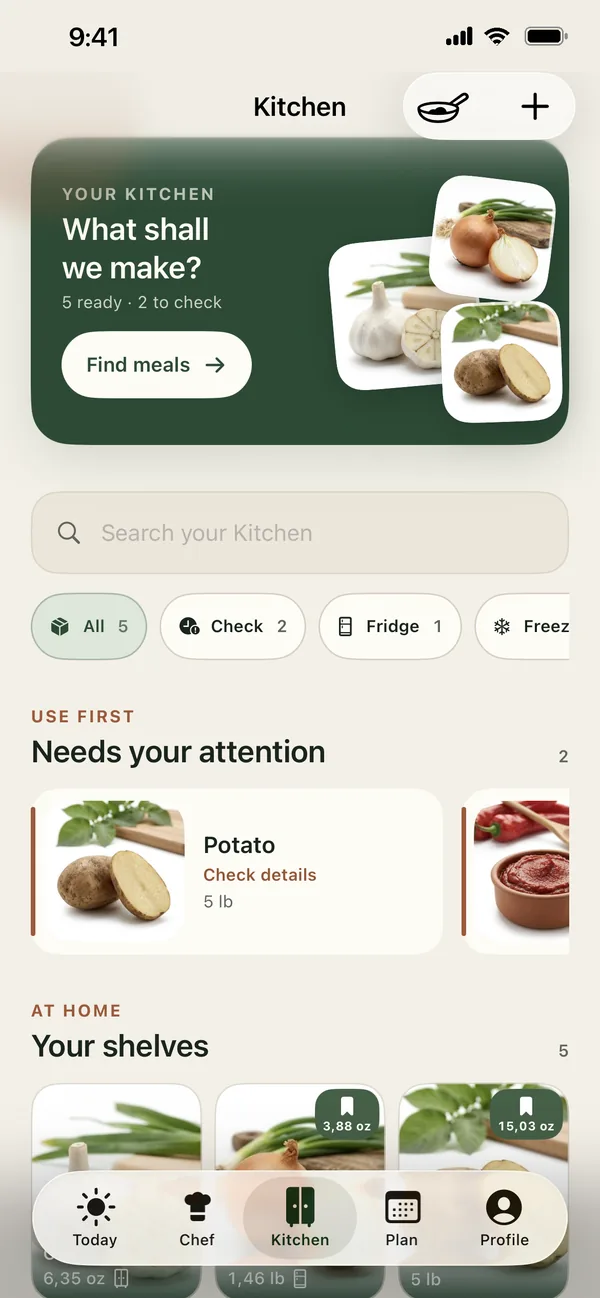
PantryWeave keeps track of your kitchen: it plans your meals from what is already in your Kitchen, and the stock stays current: when you mark a meal as cooked, you choose whether the app deducts its ingredients from Kitchen or keeps Kitchen unchanged.
Every item in its place
Kitchen shows whether each item belongs in the pantry, the fridge or the freezer.
Put the shopping away in one step
Put the shopping away in one step: tick what you buy in the store and send it straight to Kitchen, where each item lands in its pantry, fridge or freezer spot. You correct a quantity only if it differs from the list.
Tracked by where it is kept
Kitchen tracks each item’s freshness, or a suggested day to use it by, according to where you keep it, and the Use first shelf brings forward what needs eating soon.
A reminder, not a label date
Freshness in the app is an estimate meant as a reminder, not a label date.
Where the information comes from
- GOV.UK: Understanding food labelling, best before and use-by dates (first published June 25, 2026; the Food Standards Agency’s best before page now leads to this guide; read on November 19, 2026)
- Health Canada: How to read food date labels and packaging (page dated August 13, 2013; read on November 19, 2026)
- Health Canada: tips for leftovers (page dated April 10, 2025; read on November 19, 2026)
- Food Standards Australia New Zealand: Use-by and best-before dates (page last updated February 25, 2025; read on November 19, 2026)
- FDA: USDA, FDA seek information about food date labeling (December 3, 2024; read on November 19, 2026)
Frequently asked questions
What does best before mean?
GOV.UK says the best before date, also sometimes shown as “best before end” (BBE), tells you when the food might start to reduce in quality. Health Canada says it gives you information about the freshness and potential shelf life of the unopened food you are buying, and Food Standards Australia New Zealand says foods may have lost some quality after it.
Can you eat food after the best before date?
Health Canada says you can buy and eat foods after the best before date has passed, though they may have lost some of their freshness, flavour and nutritional value and their texture may have changed; it adds that the date applies to unopened products only. GOV.UK says that after the date the food may not be of the same quality.
What is the difference between best before and use by?
GOV.UK says best before dates relate to quality, while use-by dates must be shown on foods that go off quickly, such as meat products and ready-to-eat salads, and that eating food after the use-by date could make you ill; manufacturers decide which date a product carries, depending on the type of food. Food Standards Australia New Zealand says foods should not be eaten after the use-by date and cannot legally be sold after it, while foods with a best-before date can be sold after that date provided they are fit for human consumption.
Does the US use best before dates?
The FDA and the USDA currently recommend that the food industry voluntarily use the quality-based “Best if Used By” label, which, in the FDA’s words, notes the date after which quality may decline but the product may still be consumed. The FDA says current federal regulations do not prohibit other phrases, such as “Sell By” or “Use By”, if they are truthful and not misleading.
Related guides

Know what needs using first
Download PantryWeave and see what is in your fridge, freezer and pantry, and what needs using first.

Free to start · iPhone